
Why Do Repeated Plumbing Repairs Often Signal the Need for Replacement?
Frequent plumbing repairs can indicate that your pipes are aging, corroded, or near the end of their lifespan. In such cases, replacement is often ... Read More

Same-Day Service Available
Need a Plumber in Knoxville? We’re Ready to Help!





A backwater valve is a device in a building’s drain that lets wastewater flow out and closes to stop sewage from flowing back in. The residential code calls for one where the flood level rims of fixtures sit below the manhole cover of the next upstream manhole in the public sewer. Finished basements in West Knoxville may fall under that condition, but it depends on elevations and the cause of any past backups. A camera inspection of the building sewer can help separate a public sewer problem from a private line problem.
Where is the lowest drain in the house?
In a West Knoxville home with a finished basement, the answer might be a floor drain in a utility room, a shower in a basement bathroom, or a laundry standpipe tucked behind a door. It is rarely something anyone thinks about. Yet that one opening is where sewage would show up first if the sewer outside ever pushed back toward the house.
That is the whole reason backwater valves exist. They do not suit all homes, and the residential code calls for one under a specific elevation condition. For families who have turned a basement into living space, though, the question is worth an hour of thought.
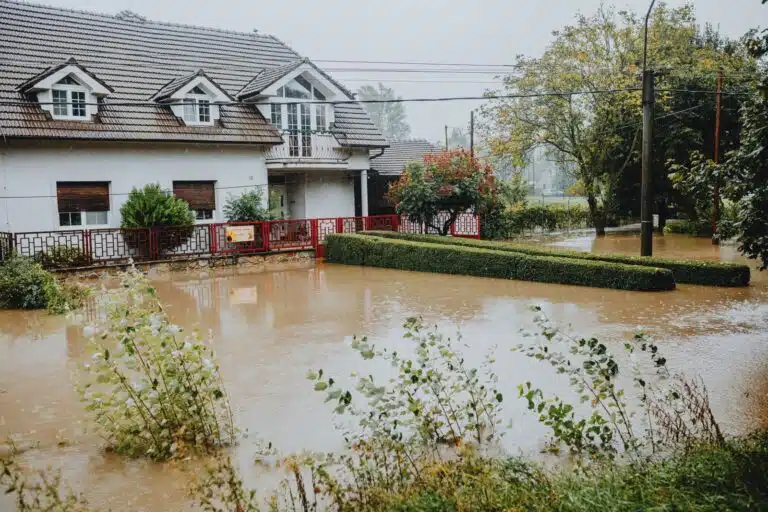
Sewage backs up into a basement when wastewater in the sewer rises higher than the lowest drain opening in the house and has nowhere else to go. The cause can be on the public side, such as a blocked or overloaded sewer main, or on the private side, such as a blockage in the home’s own building sewer.
Water in a drainage system seeks its own level. When the sewer beyond the house cannot carry flow away, the level in the connected pipes rises, and it reaches the lowest fixture opening before any other. In a home with a finished basement, that is usually a basement floor drain, shower or toilet.
The EPA describes sanitary sewer overflows that can back up into homes, and lists possible causes including “blockages, line breaks, sewer defects that allow stormwater and groundwater to overload the system, power failures, improper sewer design, and vandalism.” Heavy rain in the Knoxville area can add to that load where stormwater or groundwater finds its way into sewer pipes.
A backup can also start closer to home. Roots, a sag or a collapsed section in the building sewer, the pipe between the house and the public main, can produce the same symptoms. A backwater valve is designed to stop flow coming back from the public side, so it does little for a blockage in the home’s own line.
Because the two sources look alike from inside the basement, identifying the cause comes first. A sewer camera inspection of the building sewer can show whether the line itself is damaged or obstructed, which points toward repair rather than backflow protection.
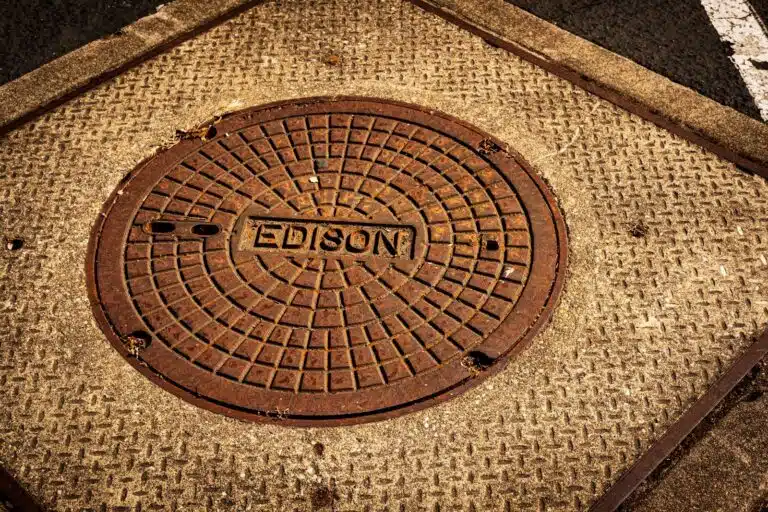
The residential code addresses backwater valves in Section P3008. It calls for fixtures whose flood level rims sit below the cover of the next upstream manhole in the public sewer to be protected by a backwater valve, and it keeps fixtures on higher floors from discharging through a normally closed valve, with an exception for existing buildings.
Section P3008.1 reads: “Where the flood level rims of plumbing fixtures are below the elevation of the manhole cover of the next upstream manhole in the public sewer, the fixtures shall be protected by a backwater valve installed in the building drain, branch of the building drain or horizontal branch serving such fixtures.” The code defines a backwater valve as “a device installed in a drain or pipe to prevent backflow of sewage.”
The flood level rim is the edge of a fixture where water would spill over. The comparison point is the cover of the next manhole upstream on the public sewer. If a basement fixture sits lower than that cover, sewage rising in the main could reach the fixture before it spills out of the manhole, and that is the situation the provision targets.
Section P3008.2 says that where fixtures sit on a floor above that manhole cover elevation and a valve is installed on the drain serving them, “the backwater valve shall be of the normally open type.” It adds an exception: “Normally closed backwater valve installations for existing buildings shall not be prohibited.” The code also states that valves “shall be installed so that access is provided to the working parts.”
Section R102.7 of the residential code lets the legal occupancy of an existing structure continue without change, with stated exceptions, while additions, alterations and repairs are to conform to the code for new work. For homeowners in the area weighing an addition or a basement finish, a West Knoxville plumbing team and the local codes office can talk through whether the elevation condition applies to the planned fixtures.
A backwater valve is worth considering in a finished basement when basement fixtures sit below the upstream manhole cover, when the home has a history of backups traced to the public sewer, or when a basement finish or bathroom is being added. It carries tradeoffs, including limits on water use while the valve is closed.
This is the condition the code names, so it is the logical starting point. Finding the answer means comparing the elevation of the basement fixtures with the elevation of the nearest upstream manhole cover on the public main. The utility serving the address, a surveyor or a plumbing professional can help establish those numbers.
A home that has had sewage come up through a basement drain during heavy rain, while the building sewer checked out clear, has a stronger case than one with no history at all. Homes with repeated backups from their own lines have a different problem, covered in this look at recurring sewer backups in older Knoxville homes.
FEMA’s urban flooding guidance for homeowners points out that once a backwater valve closes, water used inside the home cannot drain out and could back up inside the house. In practice that means limiting showers, laundry and flushing during a sewer surcharge, which is worth explaining to the whole household.
The same FEMA guidance observes that check valves “can be stuck open by debris and fail to operate,” and it recommends periodic inspection and cleaning. The residential code calls for access to the working parts. A valve buried under a finished floor with no access cover is harder to keep in working order, so access belongs in the plan from the start.
| Valve type (FEMA terms) | How it operates | Tradeoff FEMA notes | Question for a finished basement |
|---|---|---|---|
| Check valve | Closes automatically when flow reverses | Can be stuck open by debris | Is there access for periodic cleaning? |
| Gate valve | Closed by hand | Better seal, but someone has to be home to close it | Is someone usually home during storms? |
| Dual backwater valve | Combines an automatic check with a manual gate | Often installed outside in a valve pit | Is there room for an exterior pit? |
| No valve | Nothing blocks reverse flow | Relies on fixtures sitting above the surcharge level | Do basement fixtures sit below the upstream manhole cover? |
West Knoxville is an informal area name rather than a jurisdiction. Parts of it lie inside Knoxville city limits, where City of Knoxville Plans Review and Inspections handles permits, while some addresses with a Knoxville mailing address sit in unincorporated Knox County, where Knox County Codes Administration handles them. The address decides which office applies.
Inside city limits, plumbing permits and inspections run through City of Knoxville Plans Review and Inspections, reachable at 865-215-4311. The city’s current codes page lists the 2024 International Residential Code among its adopted codes.
Outside city limits, Knox County Codes Administration handles permits and inspections at 865-215-2325. A Knoxville mailing address does not by itself place a home inside the city, so confirming jurisdiction before any drain work is the practical first step.
The utility that provides sewer service to the address owns the public main and its manholes. KUB’s Private Lateral Program describes the lateral, the pipe running from the home’s plumbing to the utility connection, as the property owner’s responsibility. The serving utility is also the natural place to ask about manhole locations and any history of surcharging in the area.
Any valve installed under a permit leaves a paper trail that helps future owners, inspectors and insurers understand the system. Homeowners can keep the permit, the product documentation and the manufacturer’s maintenance instructions together. Insurance treatment of sewer backups varies and is subject to policy terms, so reviewing the policy with the insurer is worthwhile.
Tennessee Standard Plumbing serves homeowners across West Knoxville, Bearden, Farragut and the rest of Knox County. The company has served the area since 2020, has 4,000+ reviews across its Google profiles and fields 34 licensed plumbers (as of October 2026). To be clear about scope: backwater valve installation is not among the services listed on our website. What our team offers that bears on this question is sewer camera inspection, drain clearing and sewer line repair, which help answer whether a basement backup started in the home’s own line.
Four points are worth holding onto. The lowest drain in the house is where a sewer backup shows up first, and the residential code ties backwater valves to fixtures sitting below the next upstream manhole cover. A closed valve stops water from leaving the house too, and check valves need periodic attention. And a West Knoxville address may fall under the city or the county, so the right permit office depends on where the home sits.
Local service details are on our West Knoxville plumbing page.
Homeowners with a basement drain question can call (865) 352-9003.
Online booking is available for anyone who prefers to book a camera inspection. We serve West Knoxville, Knoxville, Karns, Hardin Valley, and communities across Knox County and East Tennessee.
It lets wastewater flow out of the house and closes when sewage tries to flow back in from the sewer. The residential code defines it as a device installed in a drain or pipe to prevent backflow of sewage.
It depends on elevation. Section P3008.1 calls for one where the flood level rims of fixtures sit below the manhole cover of the next upstream manhole in the public sewer. The codes office with jurisdiction over the address can confirm how that applies to new or altered work.
Comparing elevations settles it. The serving sewer utility, a surveyor or a plumbing professional can help establish the height of the nearest upstream manhole cover relative to the basement fixtures.
Generally, no. The valve is designed to stop flow coming back from the public sewer. A blockage in the home’s own building sewer calls for clearing or repairing that line, which a camera inspection can help locate.
It has nowhere to go. FEMA’s homeowner guidance notes that when backwater valves close, water used inside the home does not drain out and could back up inside, so households limit water use during a sewer surcharge.
No. A backwater valve sits on the drain side and keeps sewage from flowing back into the building. A backflow preventer protects the drinking water supply, and the residential code defines the two separately.
Periodically, following the manufacturer’s instructions. FEMA’s guidance notes that check valves can be stuck open by debris and suggests regular inspection and cleaning, with some valve types best checked by a plumber.
No. A sump pump removes groundwater that collects around or beneath a basement, while a backwater valve keeps sewage from flowing back through the drains. They address different sources of water.
It depends on the address. Homes inside Knoxville city limits go through City of Knoxville Plans Review and Inspections at 865-215-4311, and homes in unincorporated Knox County go through Knox County Codes Administration at 865-215-2325.
Often, yes. A camera inspection of the building sewer can show whether a past backup came from damage or blockage in the home’s own line, which changes the answer. Backflow protection addresses the public side, while line repair addresses the private side.



Frequent plumbing repairs can indicate that your pipes are aging, corroded, or near the end of their lifespan. In such cases, replacement is often ... Read More
Tankless water heaters are sized by maximum flow rate (Gallons Per Minute or GPM) and temperature rise, rather than storage capacity. A typical hom... Read More

Slow drains keep coming back after DIY fixes primarily because most DIY methods only clear a partial or surface clog, leaving the main accumulation... Read More