
Is a Tub-to-Shower Conversion Right for Your Knoxville Home?
Key Takeaways Tub-to-shower conversions replace an existing bathtub with a walk-in shower in the same footprint, delivering real improveme... Read More

Same-Day Service Available
Need a Plumber in Knoxville? We’re Ready to Help!




Key Takeaways
Two-story homes often carry supply lines through the attic to reach upstairs bathrooms and laundry rooms. In an unconditioned attic those lines sit outside the insulated envelope of the house and cool toward whatever the weather is doing. The residential code addresses this directly, calling for pipe in attics and similar spaces to be protected by insulation or heat where freezing temperatures occur. Knoxville area climate normals put the median first fall freeze in early November, which sets the window for checking.
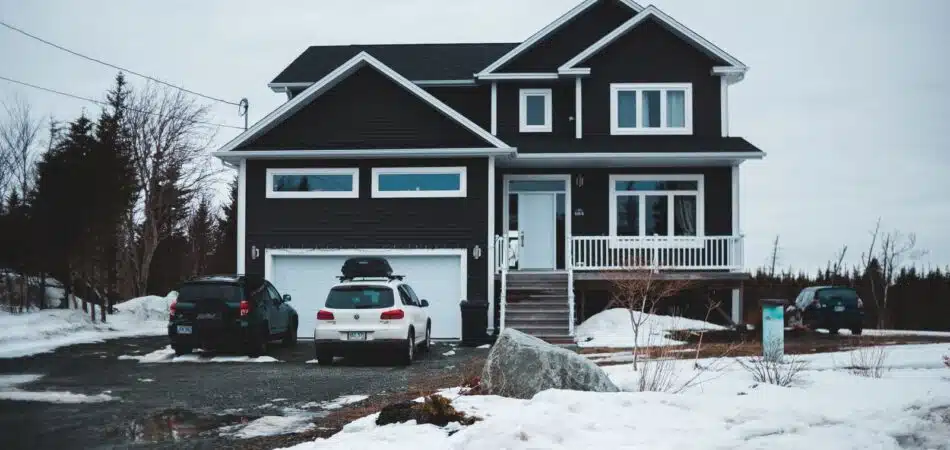
Drive through the newer parts of Karns and the houses tell you something about how they were framed. Two stories, bathrooms stacked toward the back, a bonus room over the garage. Efficient plans, built quickly, and in a good many of them the shortest path for a supply line to the upstairs bath ran straight through the attic. Which is fine. It is a common approach and there is nothing improper about it. It only becomes interesting in the first hard cold snap of the season, because an attic is not part of the heated house. It tracks the weather outside. And a pipe that spends December in an attic is having a very different winter from a pipe in an interior wall two feet below it.
Routing supply lines overhead is a practical framing decision rather than a shortcut. Running pipe through an attic avoids drilling through floor joists, keeps the run short between fixtures, and lets a plumber reach a second floor bathroom without opening finished space below it.
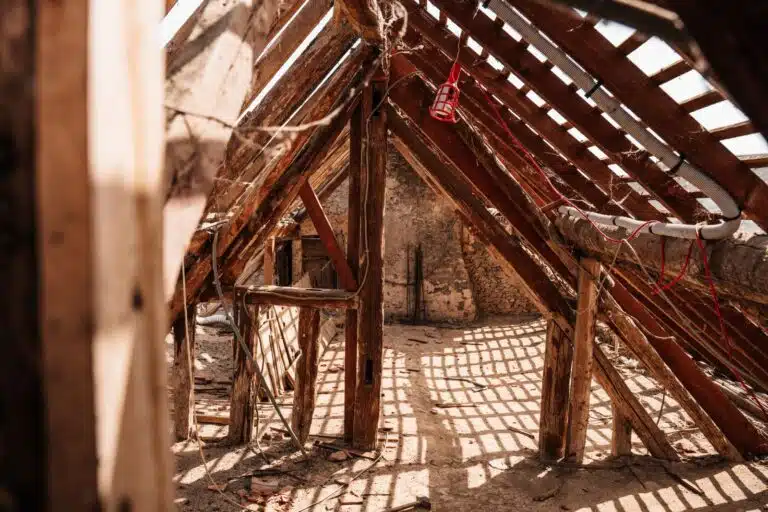 Getting water to an upstairs bathroom means going up somewhere. A chase in an interior wall works when the framing allows it. Where fixtures sit far from an available chase, the attic offers an open, uninterrupted path that avoids structural drilling and keeps runs short. On a fast build schedule, that is an attractive route.
An unconditioned vented attic sits essentially at outdoor temperature. A sealed or conditioned attic is inside the thermal envelope and behaves much more like the rest of the house. Two homes on the same street can differ here, so the assumption that any attic is cold, or that any attic is fine, is worth checking rather than inheriting.
What matters is which side of the insulation the pipe is on. A line lying on top of attic floor insulation is outside the heated space, whatever the rest of the house is doing. A line tucked beneath that insulation, closer to the warm ceiling below, is in a considerably better position through a cold night.
A crawl space pipe that fails drops water onto the ground. An attic pipe that fails drops water through insulation, ceiling drywall, light fixtures and wall cavities on its way down, often through two finished floors. The volume of water can be identical while the repair bill is not remotely comparable.
The residential code addresses this arrangement by name. It does not forbid pipe in an attic, and it does not treat the location as unusual. What it calls for is protection where freezing conditions occur, and it names the attic explicitly alongside exterior walls and crawl spaces.
Section P2603.5, headed Freezing, reads that “In localities having a winter design temperature of 32 degrees F (0 degrees C) or lower, a water, soil or waste pipe shall not be installed outside of a building, in exterior walls, in attics or crawl spaces, or in any other place subjected to freezing temperature unless adequate provision is made to protect it from freezing by insulation or heat or both.”
Two phrases carry the weight. The first is the condition, which ties the requirement to localities where freezing occurs. The second is the remedy, which is protection “by insulation or heat or both.” The provision permits the installation and attaches a condition to it, which is a different thing from prohibiting the location outright.
The Tennessee State Fire Marshal’s Office lists the 2018 edition of the International Residential Code among currently adopted codes, with amendments, effective April 17, 2025. Residential work sits under that document rather than under the commercial plumbing code, and local jurisdictions administer permits, inspections and any local amendments. Piping scope generally is described on the water piping page.
Code adoption sets a framework. It does not confirm that the pipe in any particular attic was protected correctly when it was installed, or that the protection is still intact after twenty years of stored boxes, pest activity and somebody adding a bathroom fan. Whether a specific installation complies is a question for the office that inspects work at that address.
Freeze protection is a seasonal task, and it helps to know the window rather than to guess at it. Published climate normals give a defensible answer for the Knoxville area, and they show that the first freeze arrives across a spread of dates rather than on a reliable calendar day.
Using 1991 to 2020 normals for Knoxville McGhee Tyson Airport, the median first fall date reaching 32 degrees is November 2. That is the halfway point, so roughly half of years see it earlier. There is about a one in ten chance of a freeze before October 21, which is the practical deadline for anyone who prefers a margin.
 Different reporting stations in the same region give different dates. The Oak Ridge automated station shows a median around November 4, while the Knoxville Experiment Station sits nearer October 28. Elevation, exposure and local terrain all shift the number, so a single date for the whole area would flatten a real difference.
A brief dip to 32 degrees overnight is a different event from a sustained cold snap with wind, and pipe failures concentrate in the second. Homeowners in the area can find local service detail through Knoxville plumbing and freeze protection services. The first freeze is best treated as a reminder rather than as the threat itself.
No temperature is given here at which a pipe fails, and no figure is given for how long that takes. Those depend on pipe material, water movement, insulation, air leakage, wind and how long the cold lasts. A single number would be tidy and would not survive contact with an actual attic.
| What to look at in the attic | Why it matters | Sensible response |
|---|---|---|
| Pipe lying on top of the floor insulation | The line sits outside the heated envelope | Have the routing and protection evaluated |
| Insulation sleeves split, slipped or missing | Protection has degraded since installation | Restore continuous coverage, including at joints |
| Daylight visible at eaves near the run | Wind washing carries cold straight to the pipe | Address the air path, not only the pipe |
| Heat cable of unknown age or condition | Older cable may be past its service life | Check the manufacturer’s listing and instructions |
| Stains on ceiling drywall below the run | A past leak, or one happening slowly now | Trace the source before repainting anything |
| Storage stacked over or against the piping | Crushed insulation and hidden damage | Clear the run and inspect what is underneath |
Early autumn is the sensible window for this, while attic temperatures are still tolerable and any work that turns out to be needed can be scheduled without urgency. The goal of a first look is finding out what is actually up there, since many homeowners have genuinely no idea.
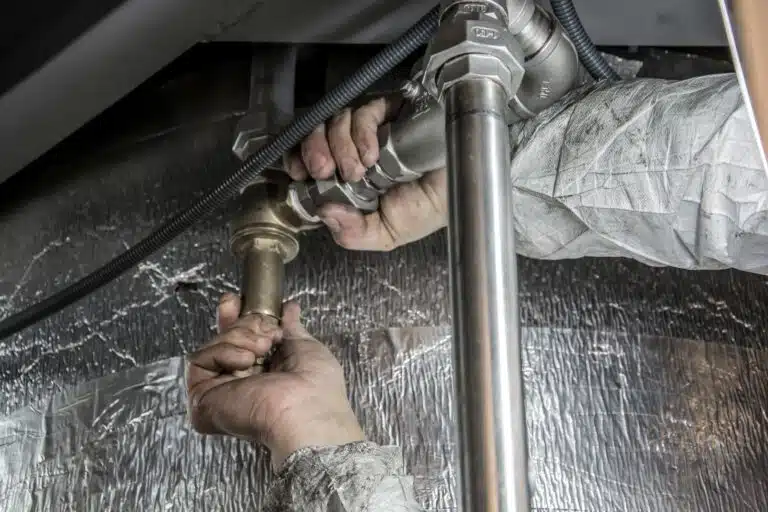 Not every two-story home routes supply lines overhead. Some run everything in interior chases. Looking directly, or asking during another visit, settles the question in a few minutes and turns a vague seasonal worry into either a task or a non-issue.
Protection tends to fail at the ends rather than in the middle. Elbows, tees, valves, the point where a line drops through the ceiling plane, and anywhere a sleeve was cut to fit are the spots where coverage gaps open up. A run that looks well insulated from the hatch can be bare at both ends.
Cold air moving through an attic strips heat from a pipe far faster than still cold air does. Gaps at eaves, around can lights, at bath fan penetrations and where the attic hatch seals poorly all contribute. Material choices matter too, and this piece on PEX pipe in cold weather covers how one common material behaves.
Anyone in the household who might be home alone during a failure should know where the main shutoff is and how to operate it. For Karns addresses, permit and inspection questions go to Knox County Codes Administration at 865-215-2325, since Karns is unincorporated Knox County. Local service information sits on the Karns plumbing page.
Our team at Tennessee Standard Plumbing has served Karns, Knoxville, Knox County and the surrounding East Tennessee communities since 2020. We have 4,000+ reviews across our Google profiles and field 34 licensed plumbers (as of October 2026). The attic calls we take arrive in two forms: a homeowner planning ahead in October, or water coming through a ceiling in January. Four things are worth holding onto. Pipe in an unconditioned attic sits outside the heated envelope and tracks outdoor temperature. The residential code calls for protection by insulation or heat or both where freezing occurs. Local normals put the median first fall freeze at McGhee Tyson on November 2, with a one in ten chance before October 21. And gaps in protection show up at elbows and ends far more often than along the middle of a run. Homeowners who want an attic run looked at before winter can reach our team at (865) 352-9003 or arrange a visit online. We serve Karns, Hardin Valley, Powell, Farragut, Knoxville, and communities across Knox County and East Tennessee.
No. The residential code section on freezing permits it and attaches a condition. Where a locality has a winter design temperature at or below 32 degrees, pipe in an attic or similar space is to be protected from freezing by insulation or heat or both. The location is allowed, the protection is what is called for.
Using 1991 to 2020 normals for Knoxville McGhee Tyson Airport, the median first fall date reaching 32 degrees is November 2, and there is roughly a one in ten chance of one before October 21. Those are long term averages for that station rather than a forecast for any given year.
Water from an attic travels down through insulation, ceiling drywall, light fixtures and wall cavities, often across more than one finished floor, before anyone sees it. A crawl space failure of the same size usually reaches the ground. The volume can match while the damage does not.
Being on the warm side of the insulation, closer to the heated ceiling below, puts a line in a considerably better position than lying on top of it. How that is achieved depends on the framing, the depth of insulation and the ventilation arrangement, so it is worth evaluating on site rather than by rule of thumb.
Insulation slows heat loss rather than adding heat, so on its own it delays freezing without preventing it during a long cold spell. The code language pairs insulation with heat for that reason. Sealing the air paths that wash cold across a run often matters as much as the sleeve itself.
No single figure covers it. Pipe material, whether water is moving, the quality and continuity of insulation, air leakage, wind and the duration of the cold all change the answer. A stated threshold would give false confidence, which is why one is not offered here.
It is one of the protections the code language contemplates. Products differ, and installation details matter, so the manufacturer’s listing and instructions govern how and where a particular cable may be used. Older cable of unknown age is worth evaluating rather than assuming it still works.
It depends on the individual house rather than on its age. Some two-story plans route supply lines overhead and some keep them in interior chases, and attic construction varies between vented and conditioned. Looking at the specific home settles it, and no general claim about local housing stock is made here.
Karns is unincorporated Knox County rather than a separate municipality, so permit and inspection questions go to Knox County Codes Administration at 865-215-2325. Confirming jurisdiction before scheduling work avoids applying to the wrong office.
Find out whether there is pipe in the attic at all, follow the full run rather than the visible portion, look closely at elbows, valves and ceiling penetrations, note any daylight or draughts near the piping, clear stored items off the run, and confirm everyone in the household knows where the main shutoff is.


Key Takeaways Tub-to-shower conversions replace an existing bathtub with a walk-in shower in the same footprint, delivering real improveme... Read More
As with many fixtures and appliances in your home, a toilet has a limited useful life. Depending on how often it is used and how well it's maintain... Read More
Sudden drops in water pressure are most commonly caused by major plumbing leaks, a failing pressure-reducing valve (PRV), municipal supply issues (... Read More